
Pogust Goodhead has experienced major leadership changes while managing some of the largest group actions before the English courts. Founder Tom Goodhead was replaced as chief executive in 2025 and later ceased to serve as a director.
The restructuring occurred alongside reports about substantial borrowing, disputed expenditure, and dependence on external litigation finance. The firm says its new board has strengthened financial controls and remains committed to protecting clients.
Funding Structure Faces Greater Examination

The debate over Pogust Goodhead’s financing arrangements reflects wider concerns about how claimant law firms fund complicated cases that may continue for many years. Such litigation requires considerable investment before a judgment or settlement can generate legal fees.
Pogust Goodhead must pay lawyers, expert witnesses, technology providers, administrators, and international teams while representing hundreds of thousands of claimants. This operating model led the firm to obtain substantial financial support from commercial investors.
In 2023, US investment manager Gramercy agreed a reported $552 million funding package with Pogust Goodhead. Additional credit facilities were subsequently provided to support continuing work, including litigation concerning the Mariana dam disaster and diesel emissions claims.
Commercial funding allows individuals to challenge powerful corporations without paying the full cost of litigation themselves. However, significant borrowing can also create questions about interest obligations, financial sustainability, and the influence investors may have over management decisions.
Founder’s Removal Reshaped Management
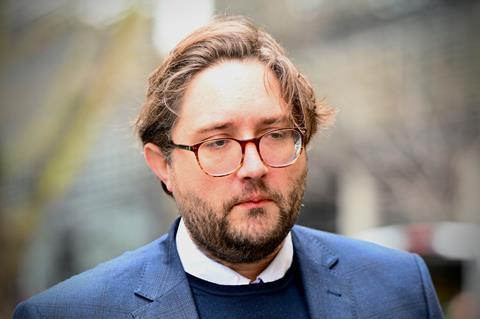
Tom Goodhead’s replacement as chief executive marked the beginning of a wider restructuring. Former chief operating officer Alicia Alinia assumed the leadership role, while experienced independent directors joined the board.
Goodhead later left the firm after reports of disagreements involving its principal financial backer. Several senior lawyers also departed during the period of disruption, including individuals involved in important environmental and vehicle emissions proceedings.
The leadership crisis intensified after media reports described allegations of excessive expenditure during Goodhead’s time as chief executive. Reported costs included private aircraft, helicopters, luxury accommodation, yacht events, and corporate hospitality.
Goodhead denies misconduct and rejects suggestions that protected litigation funds were used to support his personal lifestyle. He maintains that the expenses were connected to legitimate international business and that relevant personal costs were addressed through his director’s loan account.
Case Continuity Remains the Main Test

Financial and leadership uncertainty can create practical risks for a firm managing complex group litigation. Claimants need stable legal teams, reliable communication, secure funding, and confidence that their cases will continue without unnecessary disruption.
Pogust Goodhead has responded by restructuring its board and obtaining additional financial support for major proceedings. In June 2026, the firm announced up to $150 million in dedicated financing for the compensation phase of its case against BHP over the Mariana dam collapse.
International disputes firm Quinn Emanuel was also brought in as a strategic partner for the next stage of the BHP litigation. Its involvement is intended to strengthen case management and provide additional specialist resources following departures from Pogust Goodhead.
The firm maintains that financial backers do not control litigation strategy. According to its current leadership, qualified lawyers retain authority over all professional decisions and continue to act independently in the interests of clients.
Conclusion
Pogust Goodhead’s leadership changes have exposed the pressures associated with rapid expansion and heavily financed group litigation. Although external capital can improve access to justice, it must be supported by transparent spending controls and independent governance.
The firm’s future will depend on its ability to manage debt, maintain stable legal teams, and demonstrate that funders cannot influence client decisions. Successful progress in its largest cases will provide the clearest evidence that the restructuring has produced a more sustainable business.